Skip to content
AI & Software Engineering

Explore AI, AI Agents, software engineering, and the technologies shaping the future.

  • Home
  • AI & Agents
  • System Architecture
  • Project Management
  • Projects
  • Tutorials
  • Tech History
AI & Software Engineering

Explore AI, AI Agents, software engineering, and the technologies shaping the future.

Unity in Practice 0002 – Install Unity and Visual Studio

WCSee, May 6, 2025May 17, 2025

To install Unity and Visual Studio, follow these steps:

1. Install Unity:

  • Download Unity Hub:
    1. Go to the Unity download page and download Unity Hub.
    2. Install Unity Hub on your computer.
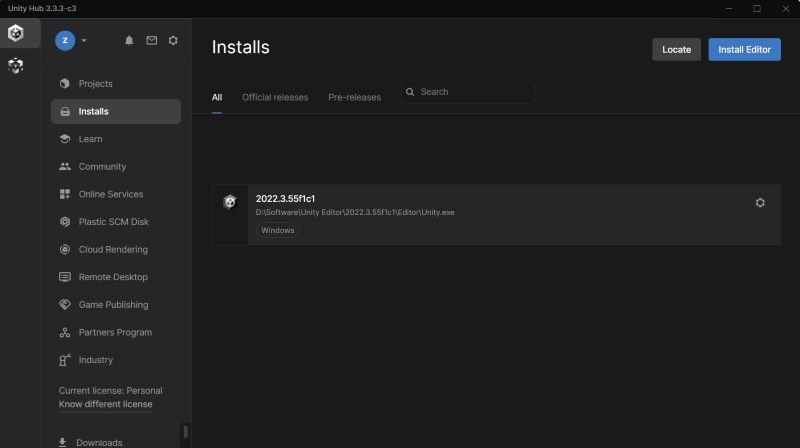
  • Install Unity via Unity Hub:
    1. Open Unity Hub and sign in with a Unity account (you can create one if you don’t have one).
    2. In Unity Hub, go to the “Installs” tab and click “Add”.
    3. Choose the version of Unity you want to install (usually the latest version is recommended).
    4. You can also select additional modules like Android Build Support, WebGL, or iOS if needed.
    5. Click “Next” and let Unity install.

2. Install Visual Studio:

  • Download Visual Studio:
    1. Go to the Visual Studio download page and download the free Visual Studio Community edition (or any other edition you prefer).
  • Install Visual Studio:
    1. Run the installer you downloaded.
    2. During installation, select the “Game Development with Unity” workload to install the necessary tools for Unity development.
    3. Complete the installation by following the on-screen instructions.

3. Configure Unity to use Visual Studio:

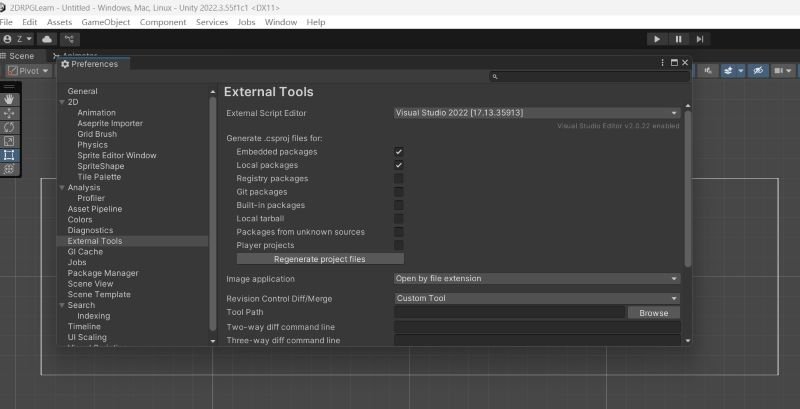
  • After installing Visual Studio, Unity should automatically detect it as the default IDE.
  • To confirm, open Unity and go to Edit > Preferences > External Tools. Ensure External Script Editor is set to Visual Studio.
You’re all set! Now you can start developing Unity projects with Visual Studio as your IDE. Let me know if you run into any issues!

References: Install & configure Visual Studio Tools for Unity | Microsoft Learn

Please follow and like us:

RSS
Facebook
Facebook
fb-share-icon
X (Twitter)
Visit Us
Follow Me
Tweet
Pinterest
Pinterest
fb-share-icon
Post Views: 310

Related posts:

Unity Game Development – Systematic Learning Roadmap (2025 Edition) Unity in Practice 0009 – How to Use Sprite Sheets in Unity for 2D Animation and UI Unity in Practice 0005 – Create C# Script Unity in Practice 0003 – Unity Editor Windows and Tools How to Check SSL/TLS Versions and Cipher Suites on macOS and Windows How to Build a Website from Scratch (Step-by-Step Guide for Beginners) Unity in Practice 0004 – Unity Rigidbody Unity in Practice 0007 – Very First Unity C# Code to Move and Jump a 2D Ball


Tech Notes Unity Installation

Post navigation

Previous post
Next post

Leave a Reply Cancel reply

Your email address will not be published. Required fields are marked *

Recent Posts

  • Chapter 5 — Major AI Agent Architecture Patterns
  • Chapter 4 — What Is an Agent Harness?
  • Chapter 3 — The Agent Loop: The Core Execution Cycle of an AI Agent
  • AI Agent Architecture and Engineering Practice Guide
  • Chapter 2 — LLM Application Architecture: Core Components and Engineering Foundations
  • Chapter 1: Rethinking AI Agents
  • The Key Milestones in the History of Artificial Intelligence (2026.08)
  • Building a Python-based AI Agent with LangGraph and OpenRouter: A Hands-On Guide
  • System Architecture Design: What Is It Really “Designing”? Understanding Through a Building Analogy
  • When Data Exceeds Memory: Choosing Between Pandas, Dask, and DuckDB for Efficient Analytics

Recent Comments

  • WCSee on Chapter 1: Rethinking AI Agents
  • WCSee on Chapter 2 — LLM Application Architecture: Core Components and Engineering Foundations
  • WCSee on AI Agent Architecture and Engineering Practice Guide
©2026 AI & Software Engineering | WordPress Theme by SuperbThemes
Manage Consent
To provide the best experiences, we use technologies like cookies to store and/or access device information. Consenting to these technologies will allow us to process data such as browsing behavior or unique IDs on this site. Not consenting or withdrawing consent, may adversely affect certain features and functions.
Functional Always active
The technical storage or access is strictly necessary for the legitimate purpose of enabling the use of a specific service explicitly requested by the subscriber or user, or for the sole purpose of carrying out the transmission of a communication over an electronic communications network.
Preferences
The technical storage or access is necessary for the legitimate purpose of storing preferences that are not requested by the subscriber or user.
Statistics
The technical storage or access that is used exclusively for statistical purposes. The technical storage or access that is used exclusively for anonymous statistical purposes. Without a subpoena, voluntary compliance on the part of your Internet Service Provider, or additional records from a third party, information stored or retrieved for this purpose alone cannot usually be used to identify you.
Marketing
The technical storage or access is required to create user profiles to send advertising, or to track the user on a website or across several websites for similar marketing purposes.
  • Manage options
  • Manage services
  • Manage {vendor_count} vendors
  • Read more about these purposes
View preferences
  • {title}
  • {title}
  • {title}